Go Back

Irish Soda Bread

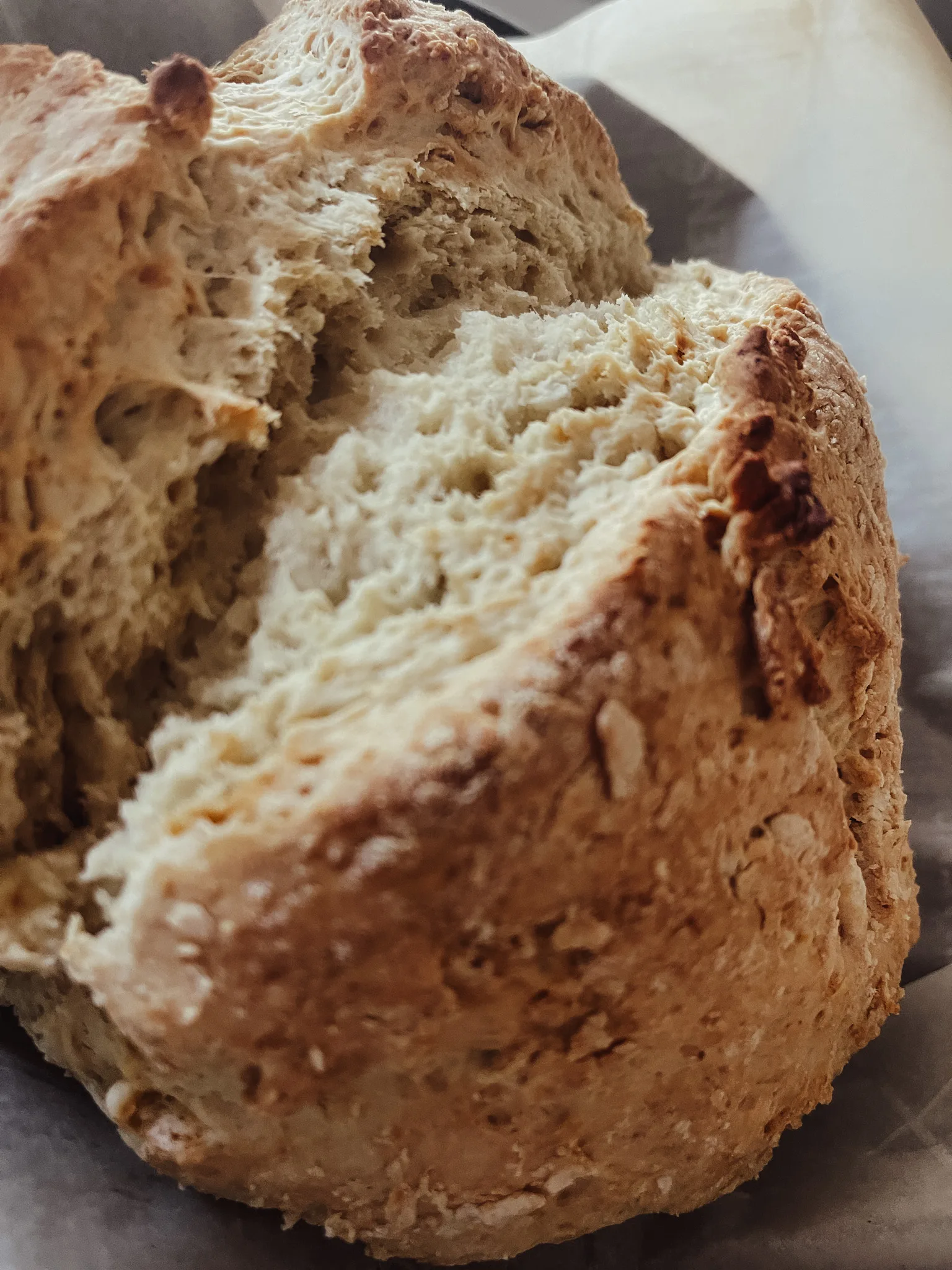
Authentic Irish Soda Bread — A quick bread and easy too! A Traditional Irish soda bread recipe is made with simple Basic Ingredients, tangy buttermilk, and optional currants. No yeast or rising time needed! Perfectly crusty on the outside with a tender, moist crumb inside. A great recipe for cozy breakfasts, hearty stews, or afternoon tea, as it requires no bread rise and can be put together quickly.
Prep Time 10 minutes
Cook Time 45 minutes
Servings: 1 Loaf
Course: Bread, Side Dish
Cuisine: Irish
Calories: 200

Ingredients
  

  • 4 Cups King Arthur All Purpose Flour
  • 2 Teaspoons Salt (Good Strong Salt. Like Celtic Sea Salt)
  • 1 Tablespoon Sugar cane
  • 1 Teaspoon Baking Soda or (bicarbonate of soda as they'd say in Ireland)
  • 1 Large Egg Large egg or Bob's Red Mill egg replacer
  • 1 3/4 Cups Buttermilk or Buttermilk Substitute I personally used Coconut Milk with 2 TBS of lemon juice.
  • 2 Tablespoons Room Tempature Unsalted Butter or Coconut Oil
  • 1 Tablespoon Caraway seeds (Optional)

Equipment

  • 1 9-10 inch Cast Iron Skillet or Dutch Oven
  • 1 Medium Bowl
  • 1 Small Bowl
  • 1 Wooden Spoon or Whisk
  • 1 Sharp Knife 

Method
 

  1. Step 1: Set the Scene
    Preheat the oven temperature to 400ºF. The kitchen should be warm and welcoming, but not suspicious. This gives the suspect just enough heat to crack under pressure.
  2. Step 2: Interview the Dry Suspects
    In a large mixing bowl, bring together the flour, salt, sugar, baking soda, and currants (if using). Mix until they’re fully cooperative—no clumps, no secrets.
  3. Step 3: Interrogate the Liquid Witnesses
    In a separate bowl, beat the egg into the buttermilk until smooth. Add the melted butter and stir. They’ve formed a solid alibi, now it’s time to confront the dry crew.
  4. Step 4: Combine & Confess
    Pour the wet ingredients into the dry. Use a wooden spoon to gently interrogate, stir just until the dough comes together. It’ll be sticky, moody, and noncompliant. That’s expected.
  5. Step 5: Prep the Holding Cell
    Grease a 9- or 10-inch cast iron skillet (or similarly sized baking vessel) with softened butter. Don’t skimp, this is where the suspect will be held for thermal questioning. If you're worried about sticky fingers, cover the bottom of the pan in parchment paper instead.
  6. Step 6: Dust for Fingerprints
    Flour your hands lightly and give the dough ball a gentle dusting, too. Turn the dough out onto a lightly floured surface. Use your hands to scrape the dough from the bowl’s sides and shape it into a rough, round loaf. A light knead may be necessary to bring it in line.
  7. Step 7: Mark the Target
    Transfer the dough to the prepared skillet. Sprinkle a pinch of flour over the top, then take a sharp knife and cut an "X" across its surface. This identifies the suspect... and ensures an even bake..
  8. Step 8: Heat Interrogation
    Place the skillet in the oven and bake for 35 to 40 minutes. You’ll know the loaf is ready to crack when it’s lightly golden brown and the bottom makes a hollow sound when tapped. Listen closely, it’s trying to confess.
  9. Step 9: Cool for Processing
    Remove from the oven, transfer the suspect to a wire rack, and let it cool for 15 minutes before slicing. Rushing this step may result in a crumbling alibi. Getting it just right will give you a great crust and a real Irish soda bread taste.
  10. Step 10: Evidence Storage
    Seal leftovers in an airtight plastic bag or container. Store at room temperature for 3–4 days, or freeze for up to 2–3 months for later analysis.
  11. Final Note: If this suspect disappears within the first hour... congratulations, detective. You’ve cracked the case.

Notes

INTERROGATION ROOM FAQ

Questions the loaf wishes you wouldn’t ask...
Q: Can I skip the currants?
A: Absolutely. They’re optional accomplices. If you're not into fruity suspects, leave them out—no judgment from this squad.
Q: Can I use whole wheat flour instead of all-purpose?
A: You can, but proceed with caution. Swap up to 50% with whole wheat for a heartier bite. Going full whole grain might result in a denser loaf, so have your alibi ready.
Q: What if I don’t have buttermilk?
A: Classic oversight. But we’ve got a trick: mix 1 tablespoon of lemon juice or white vinegar with every cup of milk. Let it sit for 5 minutes. Instant undercover buttermilk.
Q: Can I bake this in a loaf pan?
A: Technically, yes. But don’t expect the same crusty drama. Cast iron or a baking sheet gives you that free-form golden edge this loaf is known for. Loaf pans keep it too confined—like bread behind bars.
Q: How do I know when it’s done?
A: Tap the bottom. If it sounds hollow, it’s ready to confess. Still feels doughy? Send it back in for questioning (aka 5 more minutes).
Q: Can I double the recipe?
A: You can—but it’s a lot of dough to manage. Two separate batches work better than one mega-loaf. Even this bread has boundaries.
Q: Best way to serve it?
A: Warm, with a pad of butter, a drizzle of honey, or next to a bowl of Irish stew. Bonus points if consumed while reading a cozy mystery by the fire.