We’re thrilled to bring you an Interrogation Interview this month with debut author R. John Dingle. We reviewed his Psychological Thriller book, Karma Never Sleeps, earlier this month, and we thoroughly enjoyed it!
About Author R. John Dingle
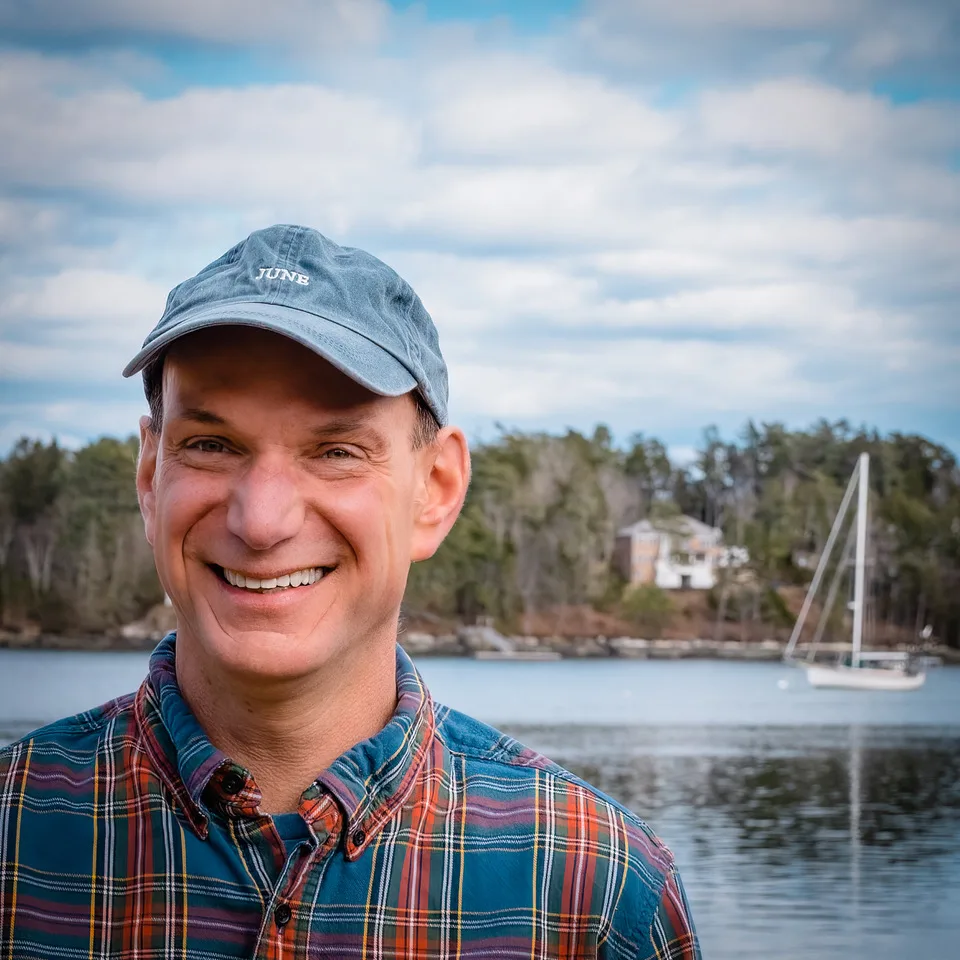
R. John Dingle was born and raised in New England. In fact, despite extensive travel, a move to Australia represents his only bragging right for actually residing outside the six-state area. John and his wife currently call a small island in Mid-Coast Maine ‘home’, both living, writing and boating from their restored 200-year old house (which they continually assure their three adult children is not haunted). The psychological thriller, Karma Never Sleeps, is John’s first novel and the first in the Gus Wheeler FBI Series. It will be published in April 2025.
*Affiliate links are used in this article. The Mystery Review Crew is an Amazon Affiliate and, as such, earns from qualifying purchases. See our privacy policy and disclosures for more information.
Our Interrogation of R. John Dingle Begins

Hello, R. John Dingle, and welcome to the Mystery Review Crew! We look forward to learning more about your newly released Psychological Thriller.
FBI agent Gus Wheeler is introduced as the protagonist in this series. What aspects of his character do you find most compelling, and how do you envision his development in future installments of the series?
Gus is a jazz musician who, after years of trying to make a living at it, gets recruited by his former college friend and roommate to join the FBI with promises of a steady income, reliable health benefits, and the ability to take sabbaticals for opportunities that would make his music career. He’s also a naturally intuitive and insightful character, and his dyslexic brain makes him oddly talented at solving clues and mysteries. The compelling part of Gus is the tension between doing the right thing by taking on cases and solving horrific crimes, while that takes him away from his passion of music and furthering his career.
Did you know the twists in Karma Never Sleeps before you started writing, or were they a surprise to you as well?
The road to getting Karma Never Sleeps was a very, very windy one. I believe the only remnants of the first manuscript are a few character names – POV changed, protagonist changed, and the story evolved dramatically. So many / most of the twists that resulted in the final book were definitely surprises to me. That’s one of the things I enjoy so much about the writing process: you work up the arc of the story, it’s characters, maybe its ending then as you write it the story and its various threads begin to reveal themselves. And where I most enjoy stories with many layers to it, this process typically takes several churns with surprises continually bubbling up out of that process.
Transitioning from writing to publishing can be a significant journey. Can you share some insights into your experience with Tule Publishing and how they supported you in bringing Karma Never Sleeps to readers?
Tule Publishing is a very special place, and I feel so fortunate to have landed with them. Right from the first contact, they were incredibly supportive. They were flexible on the sequence of publishing dates for the series to allow me sufficient time to write the books vs. a set schedule that everyone adheres to. And they’ve been very collaborative regarding selecting the final title and cover for the book, etc. And the editing process is very collaborative which I so appreciate.
How many books are you planning for this series, or are you going with where inspiration takes you?
Currently, there are three books slated for The Gus Wheeler FBI Thriller series. I’m not sure what comes after that – whether they’ll want more and/or whether I’ll see more for the characters at that point, but I’m excited to cross that bridge when we get there. The second book in the series comes out mid-November of this year, and the third is planned for the summer of 2026.
Do you have a theme in mind for the next book?
The 2nd book is due out in November 2025 and is based in a small city, so it has a very urban vibe. That story revolves around a series of women being abducted from a section of the city dubbed Music Row (think a small, less attractive version of The Quarter in New Orleans) and a suspect who is experiencing severe psychological issues as he’s overtaken by psychosis. That book is in the editing process now.
Can you share your journey to becoming an author? What inspired you to pursue a writing career?
Years ago (too many to admit), just after my wife and I had our third child, we went away to a B&B for a getaway weekend. And while there, we each put down the five things we’d like to accomplish in life, and writing a book was on each of our lists. Then, kids, family, and life tossed up all sorts of obstacles until a few years ago when I decided I wanted to put more focus on it. And, voila, Karma Never Sleeps was born.
How do you approach the process of generating new ideas and translating them into fully-fledged stories?
I’ve always loved thrillers with a cat-and-mouse element to it; stories where the protagonist not only has to solve the clues and crime but also has to react to actions by the antagonist. So that sort of forms the basis for the stories I want to write. Then, in terms of themes, I enjoy reading books where I feel I’ve been exposed to new areas or experiences. Dan Brown’s Davinci Code is a great example with its numerologist protagonist. Some areas you’ll see in this series include exotic poisons from nature, a suspect being pulled down the hole of going mad, religious fanaticism, etc. So, then I think of plots that could have those elements in them – maybe not necessarily the primary topic or driver to the story, but at least touch on them in a thread of the story. And, lastly, I bounce ideas off my wife and kids, and great ideas always come from that process.
What challenges did you face when you first started writing, and how did you overcome them?
I think the first challenge I faced was being absolutely clueless about how to write a book (LOL). I came up with a plot (read here, no thought really given to character development) and just started writing. The 1st manuscript was twice as long as a typical thriller, had no character development, and had far too many plot “events”. I cringe at putting my editor through that. Suffice to say, it was a complete re-write. I think it wasn’t until probably my 3rd or 4th go at it that my wife – who is an amazing writer – stepped in to help me.
She literally taught me how to write and find my own voice. Now, that took time, but I was finally on the right path. Then I worked up an outline that was more streamlined and churned out another version. My editor then said she wasn’t sure what to do with it…LOL. She then taught me about character arcs, etc., and had me reduce the number of plot events to make it snappier and faster-paced. More work around the characters, and I felt like I was finally getting my sea legs on this writing thing.
Are you a planner or a “pantser” (writing by the seat of your pants)? How do you approach structuring your stories?
Yes, I’m a planner. Now, on my 3rd book, I feel like I’ve got a process that works for me. I’ve always got a working list of ideas / themes for books. So, I choose one I’m interested in at the time, then I take the first month or so developing the characters and their backstories (usually a page or 2 for each character) and the overall story arc, which I do in a few page synopsis. This gives me a road map – not the specifics but the milestones of the story. I’ve learned so much about writing through this process and one critical lesson I’ve learned is a well laid foundation will save so much editing and re-writing.
After the story arc and characters are fleshed out, I then work up the first dozen or so chapters in an outline. As I write, the story evolves, so I’ve learned any more than 5-6 chapters outlined in advance after that is often a waste of time/effort. So as I write, I then plot out the next 5-6 chapters and so on.
Then, once the 1st draft is done, I give it a cover to cover read through then take another pass at it to add in more layers to the story, character traits/threads, etc. so the story isn’t just about the blocking and tackling of solving a crime but has more complexity, depth to it.
What role does research play in your writing? How do you strike a balance between authenticity and creative freedom?
I find that I do a lot of research before starting a book. Someone far smarter than I am once told me when I started writing that the details matter. So, whether it’s for an exotic toxin used, or the specifics of psychosis, or the FBI’s process for investigations and crime scene processing, I try to be as accurate and authentic as I can. That said, there are instances for creative license that I feel every author takes, and I’m no different – that’s why they call this fiction. But I find that the details of something – in the right balance/dose and not just to show the writer you know it – can really make a scene or event seem very real to the reader.
How do you approach writing dialogue to make it feel authentic and engaging for readers?
I find that dialogue is either done really well or poorly – there’s no in between. So when I write dialogue, I read it out loud several times to capture the nuances and patterns of speech as best as possible so it seems authentic. An example would be using incorrect grammar (e.g., “You okay?” vs. “Are you okay?”). And, having characters from New England, the accent and nuances of those verbal mannerisms need to be authentic as well.
Can you share a memorable interaction or dynamic between two of your characters that you particularly enjoyed writing?
Karma Never Sleeps centers around a group of women – the “Posse”, as they call themselves – and an old secret coming back to haunt them. And when one of them is found murdered and the FBI closes in, loyalties are tested, vows are broken and long-held lies are shattered in the process. This is one of the exchanges that was fun to write:
####
As if reading her thoughts, Jules put a hand on Lizzy’s shoulder and began to rub it gently. Lizzy could feel the strength in her friend’s touch and watched her arm warily out of the corner of her eye. She felt the space between them close and she stiffened.
“Hey, hey, we’re all upset,” whispered Jules in her ear. Jules’s breathing was slow and rhythmic, and her breath smelled of rum and peppermint. Lizzy felt the slow heartbeat against her shoulder and compared it to the racing of her own. How could Jules be so calm? Jules gave her shoulder a tender squeeze before sitting back in her chair. Realizing she had been holding her breath, Lizzy exhaled.
“It doesn’t matter who talked or what they said, for that matter,” said Jules, her confidence back. She ran her tongue over her teeth beneath her upper lip. “It’s always going to be their word against ours. We just have to stick together, stick to the story we’ve told forever.”
Once outside in the parking lot they all hugged their goodbyes and, as one, vowed to get through this together. The number of people remaining on the street had thinned considerably as dusk took hold. Jules stood by her glistening black SUV, with its tinted windows and sleek curves. She tapped at her phone while Mel and Maria each got in their cars and left. Lizzy anxiously twisted the ignition key of her tired, old Hyundai sedan again and again.
In her peripheral vision Lizzy saw Jules begin to slowly walk toward her. Her wrist ricocheted back and forth but still her car would not start. And as Jules got within feet of Lizzy’s side window she stopped and, without saying a word, simply stared down at her weak friend.
After another few twists, Lizzy’s car finally sputtered to life. She yanked its shifter into drive and, stepping on the gas, held tightly to the steering wheel as the car lunged onto Main Street. And as Lizzy turned her rickety, old car toward Ashby and her spa and the FBI undoubtedly waiting for her, she couldn’t take her eyes off Jules in the rearview mirror staring after her.
And it was at that moment that Lizzy realized she had lived in fear of this woman her entire life. And that may have been bearable when they had each other’s backs, when secrets remained secret. But all that was changing now and Lizzy could feel it, like the faint tremble beneath one’s feet that foreshadows an oncoming train not yet within sight or earshot.
And after a lifetime of being pushed around by Jules, Lizzy Porter was finally ready to push back.
####
What do you find to be the most challenging aspect of being an author, and how do you navigate those challenges?
I think it’s the time management aspect of it. To write a book (I’ve found), it’s all the planning ahead of time I mentioned earlier. Then it’s the writing which takes time. I’ve never been a very creative person, so it takes me longer than most, I think, to get something – a chapter, an exchange, etc. – into good shape. And I can’t rush that process – there’s a lot of writing/thinking/reading/marinating/re-writing involved for me. But it’s not just the writing. Once your book is coming up to pub day (and beyond), there’s the marketing of it also. It’s all fun, but it does take time and energy. There are interviews, posts on social media, sending out advanced copies for reviewers, etc. That is a full-time job for some in and of itself. Then layer in a day job, and it can become a lot.
How do you handle writer’s block or moments when inspiration seems elusive? Do you have any strategies for overcoming these obstacles?
Fortunately, I’ve not (yet?) experienced writer’s block. I do get stuck sometimes of where to take a storyline or scene, but that’s just because I need to work it out in my mind. I find getting away from the screen really helps me work things through. So I’ll take our hound for a long walk in the woods or along the water – get some fresh air, let things marinate in my mind. Sometimes it works itself out immediately, other times it takes a bit more time. But the key for me is taking a break and getting away from the computer for some perspective instead of just hammering away at the keyboard more.
What do you hope readers take away from your stories? Is there a particular message or feeling you aim to convey?
I just hope readers of my books enjoy the read, that they were fooled or tricked, and surprised at the outcome, or who the culprit was. I take great satisfaction when I hear “Wow, I didn’t see that coming.” Or something similar.
Have you ever received feedback from a reader that profoundly impacted your approach to writing or storytelling?
Not profoundly, but sure, feedback is a great teacher. I’ve gotten some great feedback from Karma Never Sleeps that’s sure to show itself in the future books.
Do you prefer coffee or tea? What kinds, or specific ways to enjoy these drinks?
Coffee, hands down. It’s one of my few vices (ice cream and chocolate being others). I like a “splash” of iced coffee in the afternoons to kick me forward for the balance of the day of writing.
What advice would you give to aspiring authors who are just starting their writing journey?
Someone once told me to just sit my *ss in a chair and write, and I think that’s great advice. Those 5-6 full manuscripts I wrote/re-wrote/trashed before Karma Never Sleeps? They were invaluable at teaching me to find my own voice and learning how to write. That said, the 2nd piece of advice I’d give would be to plan the story out ahead of time for all the reasons I listed earlier. There is a way to write a novel, and many people far more talented than me have discussed it, so find someone, read about it, and learn from it before you jump in. But then jump in. Planning and reading about writing will only take you so far. And, lastly, seek reviews and feedback from readers and take that feedback. The reader always comes at it with a fresh perspective, and what I’ve found is that the writer almost knows too much in their head vs. what’s on the page.
Is there a specific genre or writing style that you haven’t yet explored but would like to try in the future?
I genuinely like mysteries and thrillers, so that’s what I’m most interested in writing. I’ve written a stand-alone thriller (i.e., not in the Gus Wheeler series), and that was a great experience. I was able to start with a clean slate of characters, which was fun. And at some point – when I’m far more experienced than I am today – I’d love to write an epic story or trilogy, something larger or more substantial. I think of the Justin Cronin trilogy that begins with The Passage as an example. Not a dystopian per se, but something that could be world-altering that pits good vs. evil. I think that would be very cool to do.
If you could have dinner with any fictional character, who would it be and why?
Luke Jennings’ Villanelle. Because she’s such a unique and interesting character and has a great (albeit sinister) childlike sense of humor.
If your latest book were to be adapted into a movie or TV show, who would you cast in the lead roles?
I love that question, and I did have people in mind for a few of the characters as I wrote them. But I’ll let the readers’ imagination go for a while before naming names. But, fingers crossed, we cross that bridge someday!
What are some authors who have influenced you and or your writing style?
I’m not sure any one writer has influenced my writing style directly, but I do believe great writers are also often ferocious readers, so I try to be also. Writers I really look forward to reading include John Connolly (if you’re not reading the Charlie Parker series, you don’t know what you’re missing!), Luke Jennings, Michael Robotham, among many others.
Thank you so much, R. John Dingle, for letting us Interrogate Interview you! We look forward to the next Gus Wheeler Adventure! And congratulations to you on releasing your first novel!
Check out R. John Dingle’s Debut Psychological Thriller, Karma Never Sleeps, available now.
Karma Never Sleeps by R. John Dingle

By R. John Dingle
Genre: Thriller, Psychological Thriller
In a small town, the truth can’t always set you free…
When a second woman from a group of friends known as “the posse” is murdered in the woods near the New England enclave of Kendalton, FBI agent and profiler Gus Wheeler and his partner are called in to determine if this is a serial killing. He’s intrigued by a clue hidden on the body: a memorial picture of a teen who died 25 years ago.
Instead of helping with the investigation, the long-term friends stonewall the agents. But Gus can smell fear beneath their calm masks, fake smiles, and politely vague answers. Digging deeper, he discovers they are being terrorized by cyberstalking, spying, threats and mysterious break-ins. When a third member is hospitalized after a brutal attack, Gus suspects someone in the posse is the hunter instead of the hunted.
Is it the alpha leader Jules, her best friend Maria—married to the chief of police—outsider Mel, or weak link Lizzy? Or someone else bent on revenge? Time’s running out, and Gus’s life depends on his skill at determining who’s the best liar in town.
Find it on Goodreads, Amazon, and Barnes & Noble.