We’re diving into the connection between coffee, tea, and books this month on the Mystery Review Crew, so pull up a chair, grab your beverage of choice, and… Sip, Sip, Coffee, Tea, and Books.
Ever notice how characters in stories are always drinking something? Mine get called out for their coffee addiction all the time. Coffee pops up everywhere in my books, especially in my Tori Winters Mystery Series. One reviewer gave Deadly Keepsakes a five-star review but still scolded me for all the coffee. I was informed that in Texas, it’s sweet tea, not coffee. Fair enough. I made note of the critique, and in the next book, sweet tea made multiple appearances. Actually, I turned coffee versus tea into an ongoing, friendly tussle between my characters.
That little exchange got me thinking about why drinks show up so often in stories in the first place. Using drinks to shape a moment has been part of fiction for a long time. It works because it’s relatable. Everyone drinks something. When characters do the same, they feel real. Those small habits help bring them to life. What someone sips in a scene can quietly shift the mood, add movement, tension, comfort, grief, joy, or even hint at a clue. Even if we as readers don’t notice it right away.
Because in stories, nothing is ever just there for decoration. Not the weather, not the furniture, not the food, and certainly not the drink in a character’s hand.

Why These Two Drinks Became Storytelling Favorites Across Genres
Among all the types of beverages characters reach for, coffee and tea are the heavy hitters. They appear in stories far more often than anything else, and it’s not by accident. They’re the most familiar. Most people have some kind of relationship with one or the other. A morning ritual, a comfort habit, or the thing that gets them through a long day. Long before they showed up in mysteries, romances, or cozy novels, they were already shaping conversations, daily routines, and social gatherings.
In fiction, coffee and tea aren’t just beverages — they’re storytelling tools. Whether fueling a detective through a long night or marking the moment a teacup’s film gives away a lie, these drinks help turn ordinary moments into suspense and intrigue.
Early Detective Fiction: Where Tea Became Part of the Mystery
Tea has deep roots in British culture, where it’s more than a hot brew. It was a daily ritual, a pause in the day, a moment to gather thoughts or share news. Victorian and early twentieth-century fiction is full of tea trays, dainty sandwiches, and quiet conversations. That tradition carried forward, which is why so many British cozy mysteries still lean heavily on tea drinking.
When you look back at the first wave of detective fiction, you start to see why tea became such a natural part of the genre. Writers like Arthur Conan Doyle, Agatha Christie, and G. K. Chesterton didn’t have DNA tests or security cameras to lean on. Their detectives had to rely on sharp eyes, sharp minds, and whatever clues were hiding in plain sight.
And plain sight, back then, usually included a teapot.
Think about Sherlock Holmes. Half the time he’s solving a case, there’s a tea service somewhere in the room — Mrs. Hudson bringing in a tray, a client clutching a cup with shaking hands, or Holmes himself ignoring his tea because he’s too deep in thought. Doyle didn’t make a big deal out of it. Tea was just part of everyday London life, so it slipped naturally into the scenes.
Agatha Christie took it even further. In Miss Marple stories, tea isn’t just a drink — it’s practically an investigative tool. People talk more freely over tea. They gossip. They slip up. A character’s hesitation while pouring a cup can say more than a full page of dialogue. Christie knew exactly how to use those tiny domestic moments to reveal something bigger.
Chesterton’s Father Brown stories do the same thing in their own way. His mysteries often unfold in small villages or quiet parlors where tea is simply part of the background. But that background matters. A half-finished cup, a tray set out too early, a pot that’s gone cold — those little details help Father Brown notice what everyone else misses.
These authors weren’t trying to make tea symbolic. They were just writing the world they lived in. But because they shaped the foundation of the detective genre, their habits stuck. That’s why British cozies today still lean so heavily on tea drinking. It’s baked into the DNA of the genre — calm settings, small communities, and conversations where the truth slips out between sips.
Across the Ocean: Coffee and the Rise of the American Detective
Coffee took a different path, especially in America. It grew up in busy cities and crowded diners, the kind of places buzzing with movement and noise. So when American stories shifted toward faster pacing and more urban settings, coffee slid right in without missing a beat. It matched the vibe of detectives pushing through long nights, reporters chasing deadlines, and characters who were basically held together by caffeine and stubbornness.
While British mysteries were steeped in tea, American detective fiction grew up on coffee. A cup that was usually poured from a pot that had been sitting on a burner a little too long.
Writers like Dashiell Hammett and Raymond Chandler helped cement that image. Their detectives weren’t sitting in drawing rooms with delicate China cups. They were in cramped offices, smoky bars, and all-night diners. Coffee wasn’t a ritual. It was fuel.
Think of Sam Spade in The Maltese Falcon. He’s constantly grabbing a cup, pouring one, or ignoring one that’s gone cold because the case just took another turn. Chandler’s Philip Marlowe practically lives on coffee, late nights, long shadows, and a pot brewing somewhere in the background. It fits the whole mood of noir: gritty, tired, stubborn characters who keep going long after they should’ve gone home. Reporters, private investigators, and police detectives all shared the same lifeline, a cup of coffee. And because those early noir writers shaped the backbone of American crime fiction, their coffee-soaked habits stuck around.
When Drinks Become Clues: The Evidence Hiding in Plain Sight
Mysteries thrive on the ordinary. Coffee and tea work so well because they blend in. They’re the kind of details readers accept without a second thought. A cup on the table, a mug in someone’s hand, a teapot cooling on the counter are all perfectly normal. Which is exactly why they make such excellent hiding places for clues. Fingerprints on the cup, DNA, temperature clues, a telltale lipstick smear, or residue laced with poison. It can place someone in the room, shift a timeline, or quietly contradict a character’s story. When a writer wants to slip evidence into a scene without drawing attention to it, there’s nothing better than a cup sitting on the table, waiting for someone to take notice of what it’s really saying.
So the next time a character lifts a cup, take a second look. It might be just a drink… or it might be the moment the whole mystery quietly clicks into place.
We’ve paired the article with two cozy reads — one steeped in British tea and the other fueled by American coffee. Both are available in Kindle Unlimited.
Murder at the Dolphin Hotel: A Miss Underhay Mystery
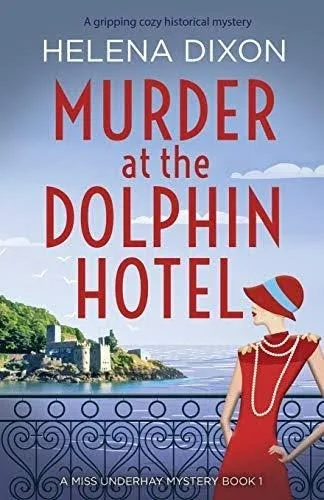
Author: Helena Dixon
Series: A Miss Underhay Mystery Book 1
Genre: Cozy, Woman Sleuth, Historical
A room with a view… to murder.
June 1933. Kitty Underhay is a modern, independent woman from the top of her shingle bob to the tip of her t-strap heels. She prides herself on the reputation of her family’s ancient hotel on the blustery English coast. But then a body is found, rooms are ransacked and rumours begin to circulate that someone is on the hunt for a valuable stolen ruby – a ruby that Kitty’s mother may have possessed when she herself went missing during the Great War. Before she can do more than flick a duster, Kitty finds herself in the midst of a murder investigation.
When the local police inspector shows no signs of solving the shocking crimes plaguing the hotel, Kitty steps briskly into the breach. Together with ex-army captain Matthew Bryant, her new hotel security officer, she is determined to decipher this mystery and preserve not only the name of her hotel, but also the lives of her guests. Could there be a cold-blooded killer under her own roof? And what connects the missing jewel to the mystery from Kitty’s own past?
A classic page-turning murder mystery! Fans of Agatha Christie, Elizabeth Edmondson and T E Kinsey will love this unputdownable whodunnit.
On Goodreads, Amazon, and Bookbub.
Deadly Keepsakes: A Tori Winters Mystery
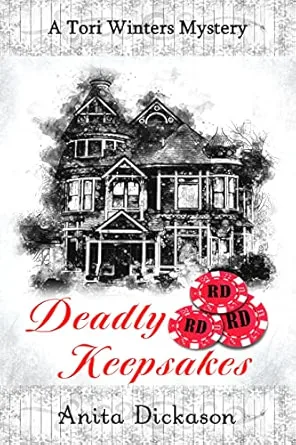
Author: Anita Dickason
Series: A Tori Winters Mystery Book 1
Genre: Cozy, Women Sleuth, Amateur Sleuth, Texas
She thought she was escaping danger. Instead, she inherited it.
After testifying in a high-profile murder trial, Tori Winters becomes a target. With her life unraveling and nowhere safe to turn, she vanishes into a quiet, quaint town, Granbury, Texas—guided only by a cryptic phone call and the promise of an unexpected inheritance.
The mansion she now owns is steeped in history and shadow. Built by a man whose empire thrived on crime, it holds secrets that refuse to stay buried. As Tori navigates a town full of strangers and half-truths, she’s drawn into a legacy of deception. A deadly game she never agreed to play.
A disinherited heir. A lawyer and his enigmatic son with too few answers. Everyone has something to hide.
And someone wants her gone.