The Mystery Review Crew is thrilled to announce our newest creative accomplice: acclaimed cartoonist Chris Manno! Starting this week, Chris will bring his signature artistic style to our mystery-loving community with original weekly cartoons that capture the intrigue, suspense, and clever twists, along with the humorous puns we all crave.
But before Chris picks up his pen to illustrate the dark alleys, suspicious characters, and plot twists that make mysteries so addictive, we had to put him in the hot seat. In true Mystery Review Crew fashion, we conducted a full interrogation—err, I mean interview, to get the inside scoop on the artist behind the art.
Who is Chris Manno? What inspires his work? And how does a cartoonist bring the world of whodunits, thrillers, and detective stories to life on paper? We’re cracking this case wide open.
Join us as we interrogate Chris about his artistic journey, his favorite mystery tropes, what readers can expect from his weekly mystery cartoons, and why he’s the perfect addition to the Mystery Review Crew family. Whether you’re a longtime fan of mystery fiction or just love great cartoon art, this introduction will give you everything you need to know about our newest team member.
The case file on Chris Manno starts here…
Who is Chris Manno?
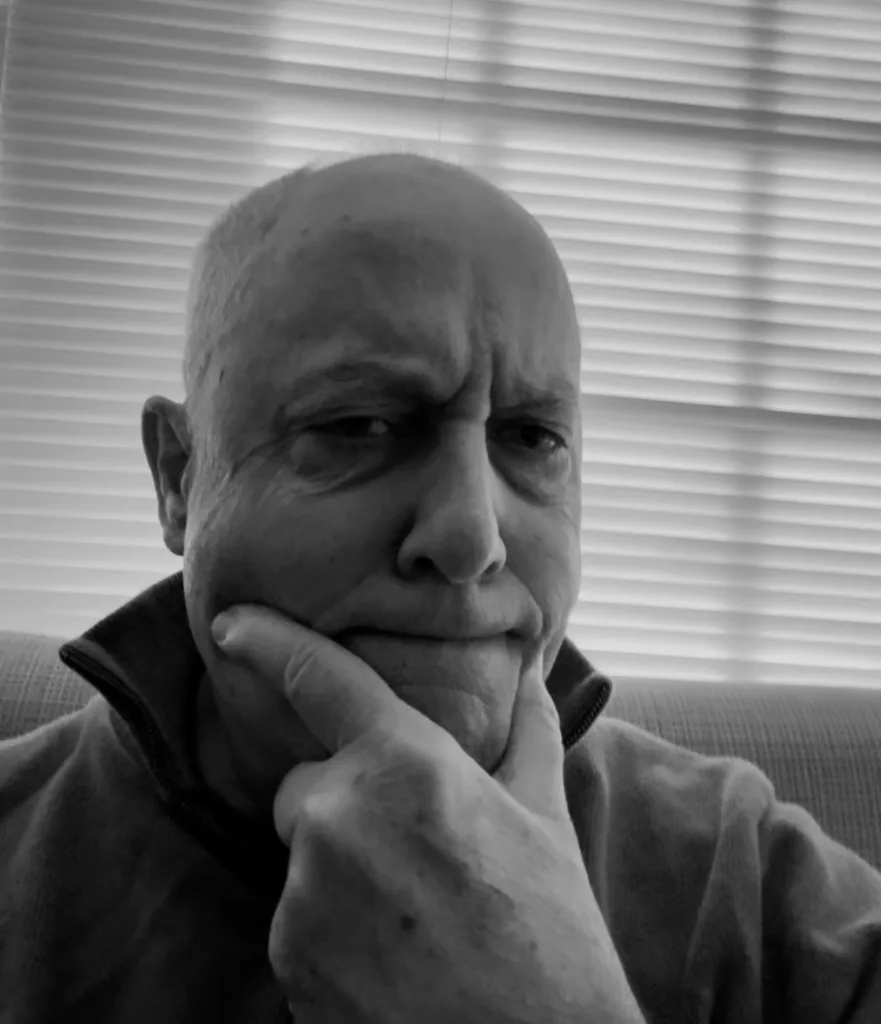
Chris Manno has written several award-winning novels (see below) as well as Amazon’s 2020 #1 New Release “An Airline Pilot’s Life,” named “Best Non-Fiction of 2020,” and which has had over 2 million page downloads.
He earned his doctorate in residence at Texas Christian University, where he taught writing from 2003 to 2023. His aviation career started in the USAF as a pilot, then spanned 35 years as a pilot for American Airlines, flying the 737, MD-80, F-100, and DC-10 both domestically and internationally.
His cartoon books examine the gamut from daily life to airline life (see below), and his cartoons appear in publications and digital media worldwide.
Case Notes on Chris Manno:
Education:
BA, English, Virginia Military Institute
MA, Business Management, Central Michigan University
PhD Critical and Poetic Theory, Texas Christian University
Professional:
USAF Pilot: 7 years; jet flying worldwide
American Airlines, 35 years; pilot, instructor pilot, evaluator pilot, captain
Adjunct Professor, TCU, 10 years
*Affiliate links are used in this article. The Mystery Review Crew is an Amazon Affiliate and, as such, earns from qualifying purchases. See our privacy policy and disclosures for more information.
Let’s find out who Chris Manno is!
Q: When you sit down to draw, what comes first: the joke, the emotion, or the image?
A: There are basically two ways I originate cartoons. First, concept or punchline. Mostly, I have a punchline in mind, then formulate the best composition of images to set up the joke. But there are a few times every month where I just want to see if I can draw some sort of unique perspective and image, then let the idea for the punchline evolve over time. For example:

That’s a topical idea (football) and a drawing I did in my car while having the oil changed. I keep 5×7 cheap drawing pads, a straight edge, and a black rollerball in both cars, plus every room in the house, to always have drawing access available. I also keep guitars handy in every room, as well as in my car in case I need to hash out a concept. Cartoon and musical ideas usually take about five minutes each to quantify on paper.
Q: What’s the most difficult idea you’ve ever tried to turn into a cartoon?
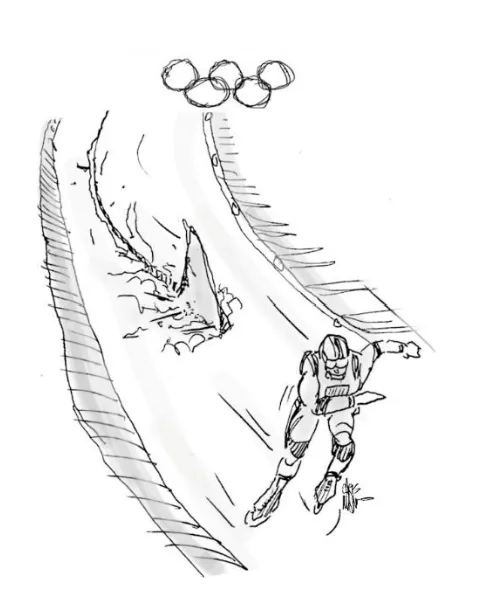
A: I think the most difficult—and best—cartoons and music are the creations of such simplicity that no words are required, just a purely visual or aural experience, like the Olympic skater. Easy to create in music which is a more intrinsic media, whereas image must be decoded. Words add an ambiguity to both image and music. Lyrics constrain a song like words do an image. When you can get pure imagery as meaning, the transfer of meaning (and the humor) land unhindered. Ditto music: melody goes up front on an instrumental and meaning—feeling—comes from the sound cues only. That’s why emergency instructions are typically composed of images, which eliminates the ambiguity of words. It’s how Ikea saves printing costs for assembly instructions.
Q: How do you know when a cartoon is finished, especially when simplicity is part of the power?
A: I’m not sure it ever is “finished;” perhaps optimized. But art, lit, and music are unstable, and meant to be so. I accept that.
Q: Where do you personally draw the line in satire?
A: For me, the red line in satire is meanness: I won’t take part in it, nor allow meanness to overshadow goodness in humor, or at least, my art. For example, Rep. Crockett referring to Greg Abbott as “governor hotwheels” is just ugly, to me. Politics aside, that’s just more meanness in an already antagonistic world. It’s also why I stay away from political cartoons, because the genre is a toxic wasteland of such ugliness I’d rather avoid. The closest I come to a political cartoon—and it makes me cringe regardless—is an oblique reference with truth but not relying on partisanship for the punchline. Still, the greatest response I get in cartooning is from common situational experiences and if there’s fun to be poked, it’s a shared laugh, rather than mocking anyone in particular.
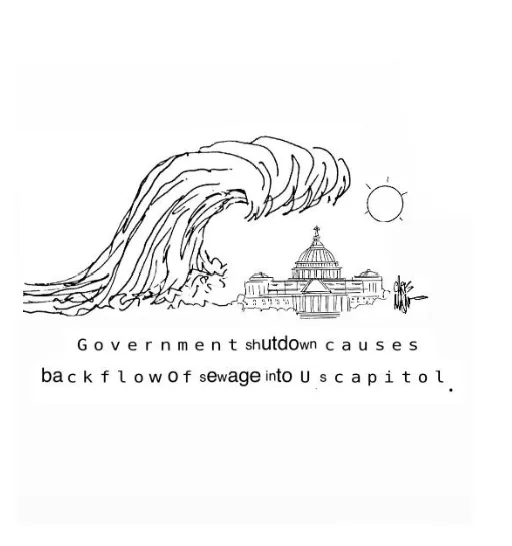
Q: What reaction do you secretly hope for when someone sees your work?
A: A basic laugh, a funny bone strike, independent of intellect. A parasympathetic response, like a sneeze. It’s just funny, and an instinctive smile shared is all the reward I strive for.
Q: How has your style changed, and what triggered that change?
A: I don’t really think my style has changed much since seventh grade, when I started drawing cartoons. That may be because I have no real art training, which I don’t think has held me back in the cartoon genre. If anything, I’ve become (I hope) sharper, more direct, and kinder. Same in my music: I have years of drum set training, including graduate level, but all I play now is acoustic guitar, with years of YouTube help. Genuine.
Q: What artists (cartoonists or otherwise) shaped how you see the world?
A: Hermann Unger is the master, in my opinion, of cartoon art. I also got to know Jeff MacNelly, who gave me an award for intercollegiate newspaper cartooning and invited me to visit his office any time. He was a creative and artistic genius. His office/studio was a playpen of cartoon art and inspiration.
Q: Where do you usually draw? Do you have a dedicated studio or a favorite spot? What’s always on your desk when you’re working?
A: When? Any time: first thing in the morning, I need my coffee and to draw a cartoon. Pad and pen are always within arm’s reach wherever I go. Sometimes I wake up in the middle of the night and draw a quick image. I don’t use a desk, just a pad in hand or lap. My process is ridiculously simple: pen, paper, smart phone scanner app; adjust in the Instagram story draft window; screenshot, done. Lather, rinse, repeat.
Q: Do you prefer working late at night or early in the morning?
A: Yes. = ]
Q: What do you do when you’re creatively stuck?
A: Hasn’t ever happened.
Just put the image on paper; the joke will come to you eventually. Here’s one that’s marinating right now:
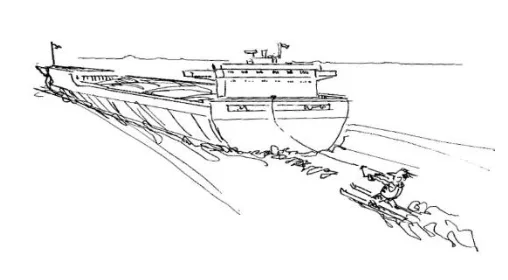
I’d been watching a news report about cargo ships and Iranian military threats. I just felt like trying to grab the ship in perspective, along with the absurdity of water-skier in tow. A punchline will eventuate, probably in the middle of the night. Anything for art. There’s a guitar at the foot of my bed as well, in case I need to flesh out a melody so I can get back to sleep. There’s no alternative, I’ve learned.
Q: Who made you laugh the most growing up?
A: Mad Magazine and National Lampoon.
Q: What advice would you give to aspiring cartoonists who are just starting their artistic journey?
A: Just draw. Whatever, whenever, wherever. Enjoy.
Q: What lasting impression do you want to leave on people, either from your cartoons, life, work, etc.?
A: Simple: joy shared.
Q: What’s something about you that would surprise people who only know your cartoons?
A: I also have a doctorate in Critical Analysis from TCU where I taught on campus for ten years, and after seven years as a USAF pilot, I was an American Airlines pilot for thirty-five years. All at the same time. Sleep is overrated.
Q: Are you naturally a funny person in real life, or does the humor mostly come out through your art?
A: I’m not really sure. I believe since I’ve focused on cartoon humor for most of my life, I’m always seeking ways to appreciate and share the funny, especially absurd side of things.
Q: What kind of kid were you growing up: the class clown, the quiet observer, or something else?
A: Sadly, the class clown, and there’s a very long list of teachers from grade school on up through graduate school to whom I owe apologies for being such a pain in the ass. Probably in the Air Force as well, and as an airline captain for three decades, not to mention hundreds of undergrads who endured my university classes. But what the heck—I had fun.
Q: If someone remembered only one thing about your cartoons years from now, what would you hope it is?
A: That they got a good laugh out of one or more cartoons. I know I did.
Q: Digital or pen and paper?
A: Pen and paper first, then smart phone camera and apps. Seems to be most efficient for cartoon purposes, requires minimal logistics.
Q: How do you envision the future of cartoons and storytelling, and how do you see yourself contributing to it?
A: I worry for both; cartoons because of the encroaching, strangling kudzu of memes, GIFs, and other soulless AI-based media killing off original artwork. Same for storytelling—I finally stopped teaching writing at TCU because with AI in general and Chat-GPT in particular, the availability of substitutes for critical writing and synthesis seems to have just about made any meaningful writing endeavor optional. AI can be productive for some fields like scientific and technical writing. But actually thinking Chat-GPT can do creative writing would, maybe will, be the death of aesthetic literature.
Q: How do you balance time for ideas, drawing, and your job?
A: I don’t. It’s like one big frozen margarita machine, constantly blending, ready to tap and enjoy. Just do it.
Q: What do you do outside of Cartoons?
A: The trifecta—art, music, lit. Draw, write, play guitar, in no particular order.
Thank you so much for letting me interview you Chris! I’m looking forward to more of your cartoon creativity.
Check out Chris Manno’s latest Cartoon Book
My NYer Rejection Collection
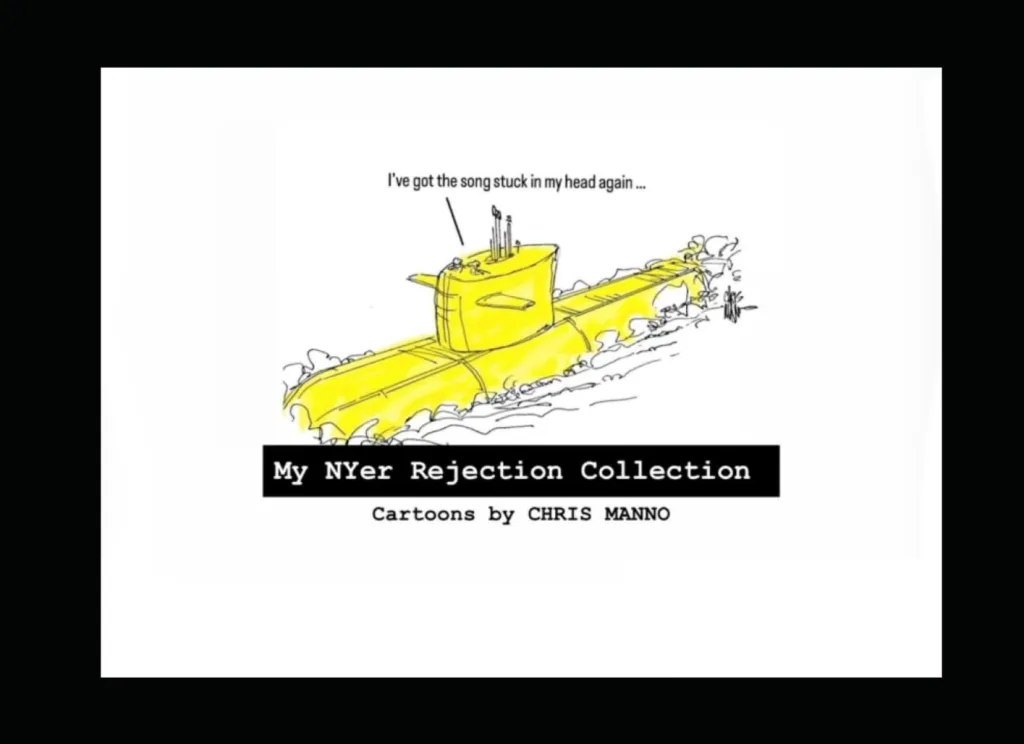
Author: Chris Manno
Genre: Cartoons, Satire
This collection is specially handpicked from several years of cartoon submissions rejected by the New Yorker magazine. Meanwhile, most of them were later published elsewhere in award-winning print and online media platforms worldwide. Judge for yourself.